
"coffee defects identification"
200 article(s) found
Q-Grader examination experience and examination form Coffee examination Notes
There are 8 major items and 20 subjects in the Q-Grader examination. The first major item (4 subjects) was tested together in 2 subjects, with a time limit of 1 hour; the second major item (1 subject) was graded for 1 hour; the third major item (2 subjects) was graded for cooked beans; the fourth major item (1 subject) was limited to 1 hour for organic acid; the fifth item (3 subjects) was limited for 1 hour; and the sixth major item (3 subjects) was limited for 1 hour.

Skills and feelings of Q Test Cup tester Certification examination Professional Coffee Coffee Association
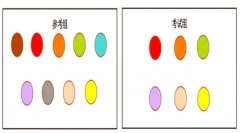
About test preparation and test feeling ①, let's first talk about Wen Xiang bottle, which is a relatively well-prepared subject in the process of preparing for all examination subjects. Coffee nose 36 flavor, is divided into four groups: enzymatic reaction, caramel reaction, distillation reaction and aroma pollution, each 9 bottles. When I was practicing, I found out each of the nine bottles, remembered what they smelled, and then smelled them over and over again.

Introduction to the characteristics of varieties produced by description and treatment of Grade Flavor of washed Coffee beans
The process of screening the grade of washed coffee beans is to put the coffee beans on the Internet and shake them back and forth by machine or manually, the beans the size of a mesh will fall and be removed, and the beans that have been removed will be screened through a smaller sieve.

Grading of coffee beans-Brazilian coffee bean treatment
Grading of coffee beans-Brazilian coffee bean treatment harvest year: 2012-the year is for roasters' reference, so the year is usually not marked on the label of roasted cooked coffee beans on the market. In the coffee beans sold in the market, in order to reduce the trouble and identification burden of consumers, they generally do not make such complicated labels. Different small producing areas, no

Introduction to SCAA Standard Coffee Cup testing equipment
Description of ① cups and bowls: SCAA recommended cups are toughened glass or porcelain cups with a capacity of 207-266ml and 76-89mm lids of any material. All utensils should be clean, odorless, the same specifications and materials (for example, glass and porcelain bowls cannot be mixed with different capacities) [cup test sample preparation] bake 1.

SCAA (Specialty Coffee Association of America) Standard Coffee Cup Test
[Cup test environmental equipment] ① Description of cup and bowl for cup test: SCAA recommends tempered glass or porcelain cup with capacity of 207-266ml and diameter of 76-89 mm. The lid can be made of any material. All utensils should be clean, odor-free, of the same specifications and materials (for example, glass and porcelain bowl cannot be mixed, and different capacities cannot be mixed)[Cup test sample preparation] Baking 1.
How to pass the Q-grader exam (3) there are 8 major items, a total of 20 subjects
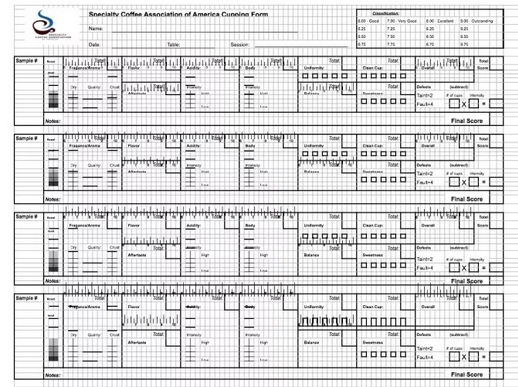
SCA Cup Test form if you sign up for the Q grader test, you should already know how to use the SCA cup test form correctly. In order to practice this part of the test, it is recommended that you test a large number of cups of coffee from different places and different processing methods. You should understand the flavor of coffee in different regions and how these flavors are expressed in the cup test. Pay attention to find coffee you don't know.

Coffee Common sense Coffee Bean quality Identification method
The quality of coffee beans is rated by cup testers (CUPPER) of several international coffee auction organizations, and is divided into five grades: grade 1 (Cup of Excellence): more than 84 points, small yield rare special coffee beans (winning beans at auction); level 2 (Specially): more than 80 points, special coffee beans, accounting for only 2% of the total global coffee bean production ratio; Good grade commercial: excellent

Kenyan coffee grading method-points classification of defective beans-high classification of origin
◎ in order to produce a high degree of classification, generally speaking, due to the cold climate, slow growth rate of coffee, higher density of raw beans, harder texture, more mellow aroma of coffee, and supple sour taste; on the contrary, the density of raw beans is smaller, the texture is less hard, the quality of coffee is worse, so some people classify by hardness. This grading method can be divided into the following categories

Introduction to the characteristics of seven major producing areas of manor flavor and taste in Kenyan coffee producing areas
This is the earliest classification of Kenyan coffee beans and is still in use in many parts of Brazil. The method of identification is to randomly take 300 grams of samples and put them on black paper, because black paper can best avoid reflection. Then, examined carefully by the professional appraiser, find out the defective beans in the sample, and accumulate different scores according to the types of defects. For example, one black bean counts as one point and one stone counts as one.

Introduction of Standard Taste treatment method for grading method of Ugandan Coffee Bean
Introduction to the Standard Taste treatment method of Ugandan Coffee Bean grading method (1) the size of coffee beans some people say that the size of beans will not affect the flavor of coffee, such as Mattari in Yemen, although the particles of beans are large and small, they are still the top grade of coffee. However, in many producing areas, the size of coffee beans is indeed a valuable indicator. General use
[literacy] have you made a clear distinction between the coffee bean grading criteria? (above)
There are different ways to manage the origin of coffee beans, some are composed of large and small farmers, some are dominated by professional business owners, even if the coffee in the same place, its quality and flavor are also different, in order to mark the quality of coffee, but also in order to make the transaction more convenient, so there is coffee grading. Coffee beans are processed differently in different countries, so they are produced.

Why is the selection of coffee graded? What are the ways to grade coffee?
Select coffee is usually the top coffee; but what does the top coffee represent? Who is in charge of grading? How should it be graded? Although grade is not the only criterion for identifying flavor, it is still a fairly objective indicator. Why there are different ways to manage the origin of graded coffee; some are made up of large and small farmers, and some are dominated by expert enterprises. Even if the same
Qgrader examination professional coffee cup tester certification how to take Q
After successfully passing the Q GRADER exam, some friends who are interested in the Q GRADER exam have asked me about the exam. It is true that there is less data in this area. Therefore, I would like to make a general summary here to give some reference to friends who want to take the Q GRADER. First, about the examination subject Q GRADER is an examination jointly certified by SCAA and CQI. At present, the examination will be arranged for 5 days.
Reference index of coffee bean grading
(1) the size of coffee beans it is said that the size of beans does not affect the flavor of coffee, such as Mattari in Yemen. Although the particles of beans are large and small, they are still the top grade of coffee. However, in many producing areas, the size of coffee beans is indeed a valuable indicator. The regions where this classification method is generally used are Kenya, New Guinea and Poland.

How to select high quality coffee beans
In fact, at present, there is no unified classification in the coffee industry, and each country of production is divided into different levels. For example, Brazil sets NO.2 as the highest level and Jamaica sets NO.1 as the highest level.

Methods for selection and identification of Honduran coffee beans the origin, flavor and taste of Honduran coffee
Flavor and taste characteristics: good flavor, rich and mellow, suitable for mixed drinking. Honduras is located in the north of Central America, facing the Caribbean Sea to the north, the Gulf of Fonseca in the Pacific Ocean to the south, Nicaragua and El Salvador to the east and south, and Guatemala to the west, mostly mountains and plateaus. It has a tropical climate, mild temperature and abundant rainfall, so it is an ideal place for coffee growth. Honduras

Tasting teacher 20 test questions _ Q Grader course written test project "Coffee Comprehensive knowledge examination"
Professional coffee knowledge exchange more coffee bean information please follow the coffee workshop (Wechat official account cafe_style) 1. Coffee Comprehensive knowledge Test (a test) the Coffee Comprehensive knowledge Test is the only written test in the Q Grader course. It consists of 100 questions related to coffee planting, picking, primary processing, cup testing, grading, roasting, and brewing. Examinees are at 6.

Special flavor Kenyan coffee Flavor Taste Manor Features Berman Manor
This is the earliest classification method and is still in use in many parts of Brazil. The method of identification is to take a random sample of 300 grams and put it on black paper, because black paper can best avoid reflection. Then, professional appraisers carefully inspect the samples to find defective beans and accumulate different scores according to the types of defects. For example, 1 black bean counts as 1 point, 1 small stone counts as 1 point, and 1 large stone counts as 1 point.

Description of Manor name and Flavor in boutique Coffee producing area in Kenya introduction to planting environment of taste varieties
This is the earliest classification of Kenyan coffee beans and is still in use in many parts of Brazil. The method of identification is to randomly take 300 grams of samples and put them on black paper, because black paper can best avoid reflection. Then, examined carefully by the professional appraiser, find out the defective beans in the sample, and accumulate different scores according to the types of defects. For example, one black bean counts as one point and one stone counts as one.